Blog

From the Pitch to the Boardroom: What Football Teaches Us About Leading Projects
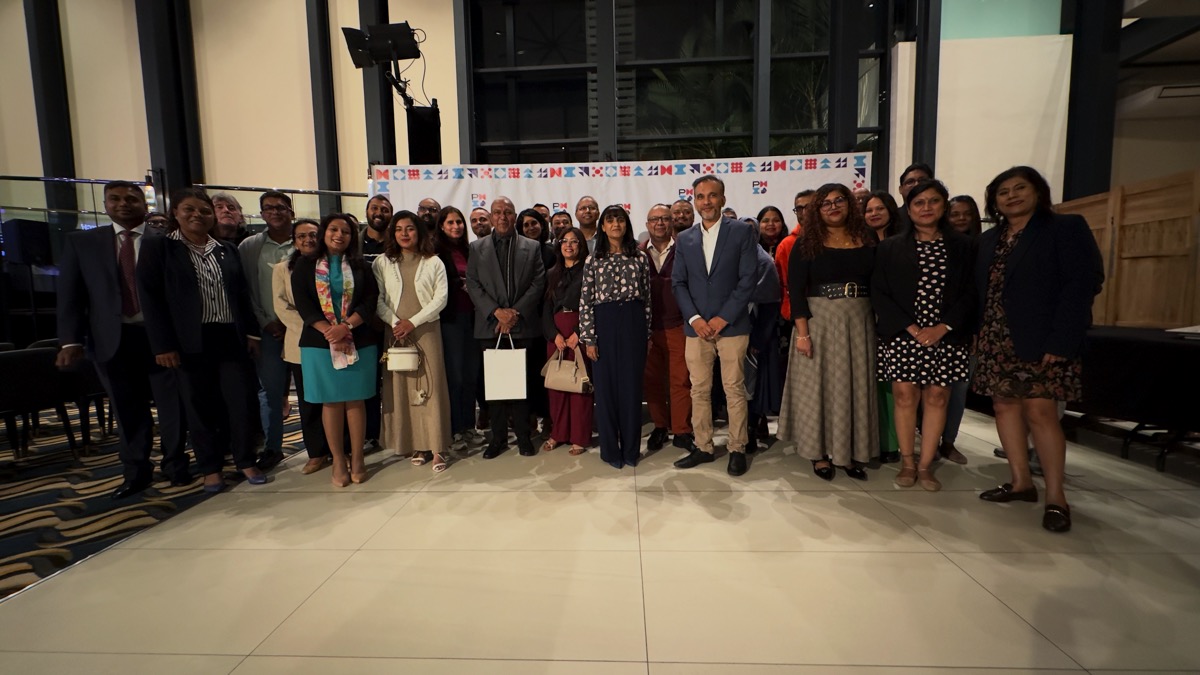
What do a former national football coach, a top corporate CEO and a leading project management expert have in common? On 9 July 2026, the PMI Chapter of Mauritius brought all three onto the same stage for a conversation that had never happened in Mauritius before — and the answer became clear very quickly: the instincts that win championships are the same ones that deliver exceptional projects.
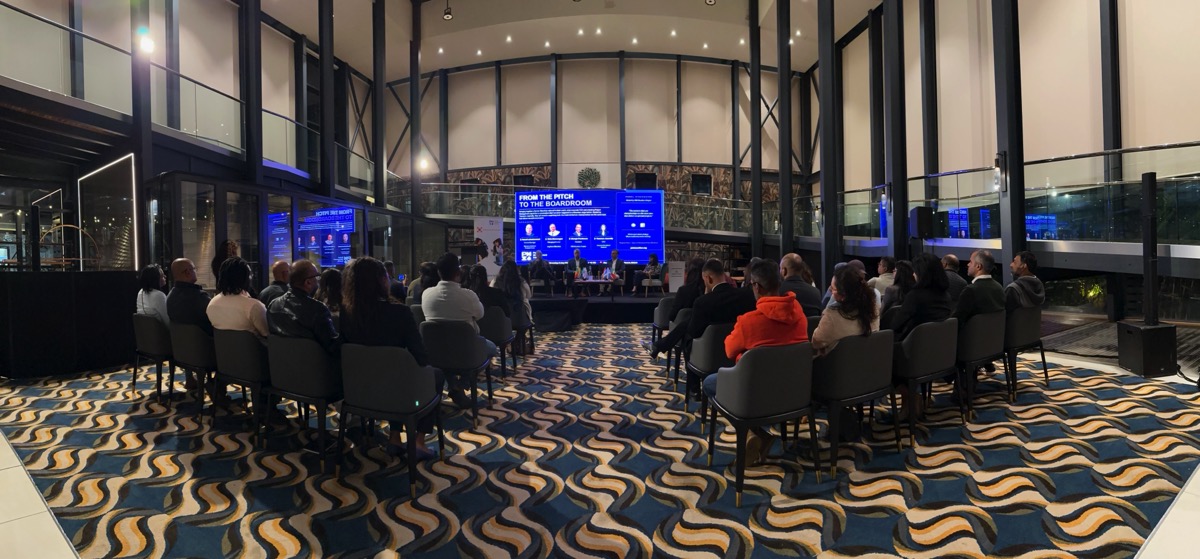
From the Pitch to the Boardroom featured Saoud Lallmahomed, former Mauritian national football coach; Vidia Mooneegan, corporate CEO; and Shoayb Peerbocus, President of the PMI Mauritius Chapter, in a discussion moderated by Tasneem Jaumally. Over ninety minutes, the panel moved fluidly between the football pitch and the project boardroom, drawing lessons on planning, agility, leadership and — above all — people.
Performing Under Pressure: Planning, Agility and Execution
The discussion opened with a question every leader faces: how do you prepare a team to perform under pressure, and how do you respond when things do not go according to plan?
For Vidia Mooneegan, the answer starts with trust. Under pressure, what separates a high-performing team from an average one is that every member knows their colleagues have their back. Agility, he argued, is equally essential: when unexpected situations arise — new legislation, shifting market conditions — leaders must be able to rethink the plan without losing sight of the overall goal. Strong change management is what allows organisations to adapt successfully.
Saoud Lallmahomed brought the same idea to life through football. Before every match, a coach must anticipate that the game may not unfold as expected. Players are briefed on Plan A, Plan B and even Plan C, so they know how to respond when circumstances change. Tactical adjustments often happen mid-match, and the team must understand the coach's mindset well enough to adapt the strategy in real time. Leadership on the field is shared, too — captains across defence, midfield and attack help guide the team through the pressure of the moment. The coach, he reminded us, must believe in the game plan while remaining flexible enough to change it.
Shoayb Peerbocus connected these ideas back to the discipline of project management. Projects follow a structured approach to planning and delivery, and today AI can meaningfully support planning activities — but execution still depends on people. Dashboards help teams monitor anticipated risks, and contingency plans prepare projects for the unforeseen. Ultimately, execution is where the real work happens.
One analogy from the evening captured the parallel perfectly: the coach is the CEO, the defenders are your cybersecurity team, the midfielders are the business development managers seeking out every opportunity, and the substitutes on the bench are your contingency plans — because things may not go as planned. The audience was even invited to imagine legendary coaches like Sir Alex Ferguson, Jürgen Klopp and Pep Guardiola alongside iconic business leaders: different arenas, same fundamentals.
Leadership, Stakeholder Management and Team Dynamics
From planning, the conversation shifted to people — and to the idea that successful leadership is built on communication, relationships and having the right team.
Shoayb Peerbocus stressed that leaders should engage with stakeholders regularly and, above all, listen. Communication sits at the heart of stakeholder management: leaders need to understand how people feel about the work they are doing, bring people together, and manage conflict constructively. Clarity matters too — on any project, the team must be aligned on what it is trying to achieve. And diversity strengthens that team. As he memorably put it, diversity is like a fruit salad: individually, the fruits may be unremarkable, but together they create something far better.
Tasneem Jaumally added that leadership is also about managing perception — helping people understand the purpose behind decisions and change.
Vidia Mooneegan offered a candid perspective on leadership fit. As organisations move from one era to another, they cannot expect different results from the same approach. Reaching new goals requires the right people, the right values and, sometimes, different leadership. Even the right leader can struggle if placed in the wrong environment or given the wrong exposure. Success comes from having the right leader, supported by the right team and the right culture.
For Saoud Lallmahomed, everything comes back to the relationship between the coach and the players — a bond that must be strong and continuously renewed. Recreation and recovery are essential to maintaining a positive mindset and team spirit, a principle that applies just as much in the corporate world and in project management. Teams will always give their best when they have a strong relationship with their leader. And while the coach sets the pattern of play, players in action may need to modify it themselves as they read the challenges in front of them — because they have been trained to be loyal to the outcome of the match, not just the plan.
"One Team, One Body, One Bond"
In the closing exchanges, Saoud left the audience with a powerful reminder: projects, just like football, are ultimately about people. There must be a genuine bond between team members, and a willingness to work together — there is no substitute for team spirit. His formula for success: "one team, one body, one bond."
He also cautioned leaders against reducing their craft to processes and tools alone. Football, he explained with characteristic passion, is a science — but not an exact one. A good coach, like a good leader, cannot rely solely on statistics and logic. Sometimes you need to trust your instincts and your understanding of people. For project managers, that means displaying empathy, looking beyond what is visible at the surface, and combining data with human judgement to make the best decision.
Key Takeaways
- High-performing teams are built on trust.
- Leaders should prepare for uncertainty with multiple scenarios while remaining agile.
- Planning is important, but successful execution depends on people.
- Communication and stakeholder engagement are central to effective leadership.
- Strong relationships, the right leadership and the right team culture drive success.
- Whether on the football pitch or in the project boardroom, people remain at the heart of every successful team.
A special thank you to our volunteers Dhiraj Beechoo, Kovila Rambeas, Jena Summoogum and Nathraj Chadee for their valuable input for this write-up.